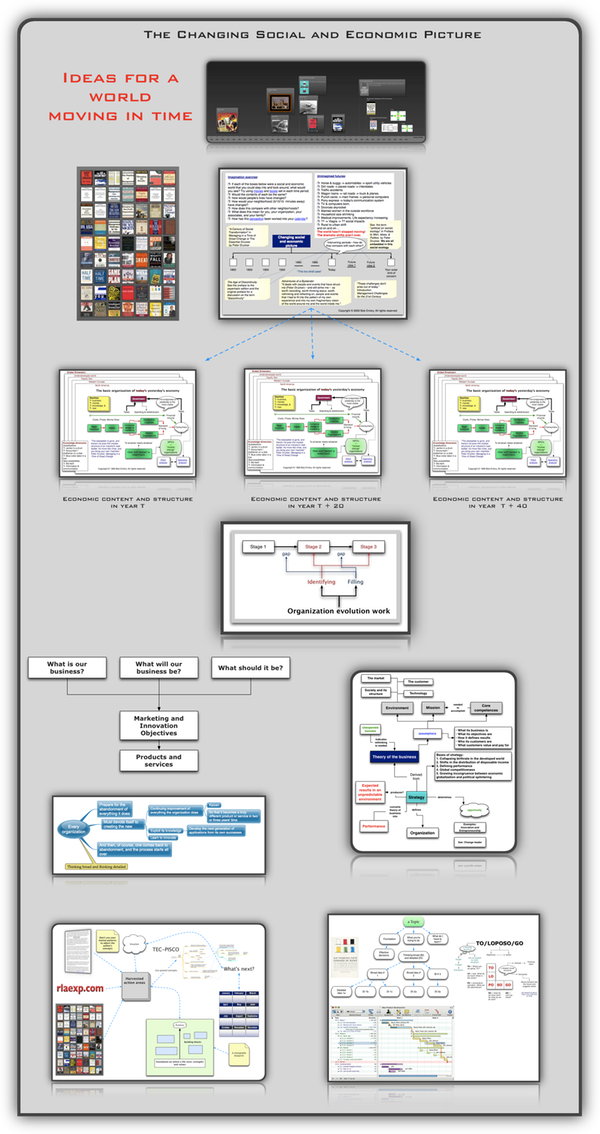
pyramid2dna

pyramid to dna

brainroads toward tomorrows mental patterns


rlaexp.com = Real Life Adventures + Exploration

Exploration includes new Exposure
which includes fresh insights from repeated exploration.
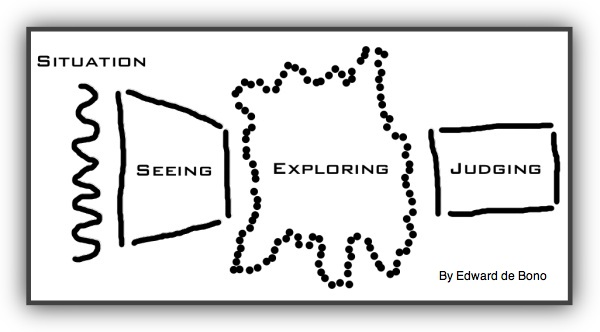
Why? “You can’t design your work or life around a temporary situation.”

“The Sweep of History” makes everything a temporary situation — explored further down the page.

Some situations may trump everything else.

Economic melt downs
New opportunities opening up
There are multiple additional examples throughout this page …

exploring

This page is an introductory brainroad
for exploring some of the major aspects
of our unfolding knowledge economy and knowledge society.

There are brainroads toward tomorrowS.
And there is being a prisoner of yesterdayS.

The three ideas above don't necessarily move in parallel.

All of the political talk concerning the economy
is connected to the topics on this page


line


Click Here for a Site Overview

A quick scroll through the site overview page
should give you an idea of the site’s scope.

navigation links

TLN key links

500+ web pages and 100+ PDFs. Site map

Lots of links between pages (connections)

Don't memorize, calendarize! Working something out in time.


line


rlaexp.com is largely based on Peter Drucker’s work.

The link just above is a Google site search

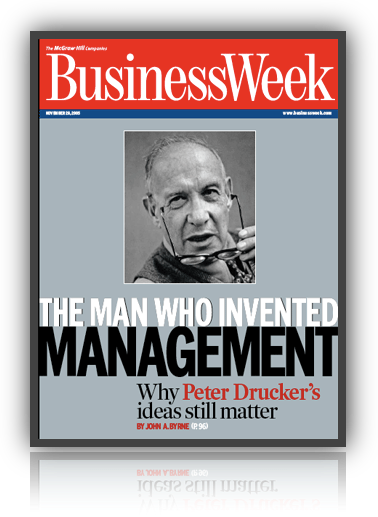
drucker business week

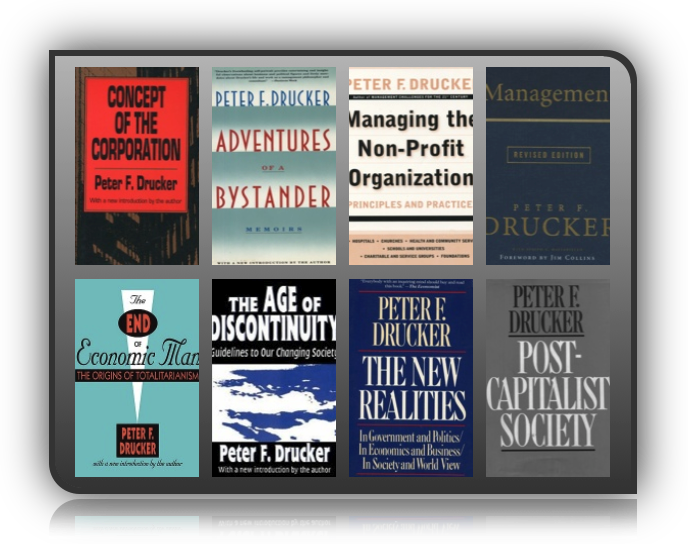
Drucker books

Two fundamental questions:

bbx Is extrapolating the past an effective approach to getting to 2015, 2020, 2030?

gone downton

HP, Yahoo, AOL, Kodak, RIM, Nokia …

bbx How does anyone think about things they’re not already thinking about?

radar differences


rlaexp.com is a unique time “landscape”
for exploring future directions and time investments.


line


This page is not going to be an easy or fast read.
The time span covers at least six generations.

There are at least three major time lines:
The sweep of history which encompasses
the organization life stories
that have an impact on your life line.


This is a much easier path


line


The basic initial idea is to consider
the desired scope of ones’s action radar
and the consequences.

radar over time

The human brain only act on what's in front of it.
This site will most likely give you some new major options.


New knowledges arrive at different time intervals …

How many people have this on their radar
and are doing something constructive?

film

Larger

Knowledge is constantly making itself obsolete and creating dead-ends and temporary situations in the process.

It is in your best interest to read through this page from the viewpoint that your current job or organization are not going to last forever — or any other organization.

How well you are currently doing is not a reliable future forecast — just look around or above.

Life-time employment is a dying — dead — concept.

It is your responsibility to develop yourself for tomorrowS — no one else can do it for you.

To get the benefits from any of this, you have to calendarize — think it through in time (including the “sweep of history”)

You may want to think in terms of positive, constructive movement in harmony with the “sweep of history.” This presents a considerable mental challenge because the human brain is always trying to make sense of things in terms of experience. At some point the future is always different from experience and what experience expects. Unleash yourself.

Topics from A Class With Drucker to consider calendarizing:

bbx What Everybody Knows Is Frequently Wrong

bbx If You Keep Doing What Worked in the Past You’re Going to Fail

bbx Approach Problems (challenges) with Your Ignorance—Not Your Experience

bbx Develop Expertise Outside Your Field to Be an Effective Manager

bbx Outstanding Performance Is Inconsistent with Fear of Failure

bbx You Must Know Your People to Lead Them

bbx People Have No Limits, Even After Failure

bbx Base Your Strategy on the Situation, Not on a Formula

How much of your energy is aimed at making the future today?

Just working on routine tasks and waiting on a raising tide are very likely to leave you stranded in yesterday.


The more “roads” your brain has been down the better prepared you’ll be for the roadS ahead of you. For a lot of people there are going to be disjointed roadS. There are a number of implications contained in the illustration above — rolled film killed by digital and digital single purpose devices wounded by multipurpose always carried devices. What does it say about the organizational activities and their future value?


The exploration arrow TLN key links for a “surface” view of the topical landscape

navigation links

TLN key links

Some political / social ecology — a key area of insight !!!

Changing social and economic picture

Snap shot of the economy ::: content, structure, money flows | effort | consumer lives

Work life brainscape © ::: a bread crumb trail for knowledge workers — career evolution

Organization evolution and real innovation (beyond the hype)

Thinking

Using conceptual resources as brainroads
to create brainscapes and brain addresses
to revisit and create new work agendas
for a different world and different future

Life design — as we don't know it


Thinking … the most fundamental,
the most important aspect of life,
the basis for everything is totally neglected …

Book store: no thinking category

Universities: no thinking faculty and zero possibility thinking

School: no thinking subjectEdward de Bono

Thinking is the knowledge worker’s specific work;
it is his/her “doing.” — Peter Drucker


arrow … to explore beneath the surface, skim over the site map (500+ web pages and 100+ PDFs with lots of interconnecting links)

site map text

text site map


The purpose of this entire site: preparing for a different world and different future across multiple time spans in one’s life and the lives of those connected to you through time: associates in your organizations across time and parent to child to grandchild. Additionally, every topic can be viewed from several vantage points: a top manager looking at other organization members; organization members looking at each other; citizens looking at organizations and their members; an organization looking for acquisition targets … There are serious implications attached to each of these and they are in the news almost everyday.

networking

life lines

A major objective — at the minimum — is to avoid becoming a prisoner of the past as we advance deeper into the knowledge economy and knowledge society. Depending on “schooling” for an education is a sure way to become a prisoner. You may be astonished by how much practical education you can get by calendarizing the key topics on this page.

csep to action

Larger


This site is a Life-TIME Investment System (LTIS) for the purpose of Time-Life Navigation (TLN) in a world moving toward unimagined futures — a prototype work approach. Part of the work approach involves “shopping” for desirable actions while considering the consequences of the various alternatives. Navigation implies knowing where you're going and charting a route with appropriate danger avoidance maneuvers built-in. In a unpredictable world, preparation and systematic alertness may be the key navigation aids.

ltis for tln

Larger

Ever think about where are you in life? How is it even possible to know? If you think its obvious, take a look at the daily news. Where it is wise for you to navigate toward or where is it wise for you to not navigate toward (destinations to absolutely avoid). The places we can navigate toward are likely to be in flux — see ice floes below. At one time navigating toward a job at Kodak film might have been a wise decision. What does your future depend on? And what does that depend on? And what does that depend on? And what does that depend on? And one remote falling domino can send a shock-wave through the dependencies.

dominos falling

life lines

You — including CEOs — can't design your life around a temporary organization — think of the implications.

Ever notice that when a prominent, previously successful organization gets in trouble they look to the outside for new management? This means that the existing human organization is essentially bankrupt. It also means that the organization’s operational and “future directed” developmental activities have failed the organization. Many of these organizations are well staffed with people possessing advanced degrees, certifications, and MBAs. This page has time investment alternatives …

Very little of rlaexp’s content is subject specific. The real world is not subject specific. Subject specialist have a role to play but it is not deciding where the mothership goes — more on this further down the page.


Spencer Stuart’s Tom Neff, the dean of CEO Executive Search, puts it baldly: “We are experiencing a demand for new types of skills and sacrifices in C-level executives that many are not prepared to bring to the table.” (Quote Source).

BTY: the last five paragraphs were TLN navigation aids.

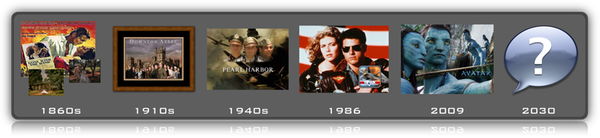
If the trail down this page is a little baffling look at one of the time lines toward the top of the page and imagine yourself at an earlier point in time and check your bafflement level as the world unfolds. Also there are people ahead of you and behind you in age and contribution. These people are interwoven with your life.


Concept illustrations

realities

Links to Books by Peter Drucker

(with a work process)

drucker books concept of the corporation Adventures of a Bystander Managing the Non-profit org Management Revised Ed The End of Economic Man Age of Discontinuity The New Realities Post-Capitalist Society

Summary of the landscape and brainroad ahead: The future is between the ears

bbx This site is a Life-TIME Investment System for the purpose of Time-Life Navigation in a world moving toward unimagined futures — a work approach.

bbx The entire site is a brainscape for exploration and action thinking

bbx You can only work on and with the things on your radar. You can only navigate toward the things, places etc. on your radar.

bbx What do you want to harvest and act on?

bbx The Sweep of History and Thinking about Time Usage

bbx Because we live in a changing world — and other reasons — we need a way to force ourselves to look for and at things that aren’t on our radar (another way of saying exploration) and decide what to do about them

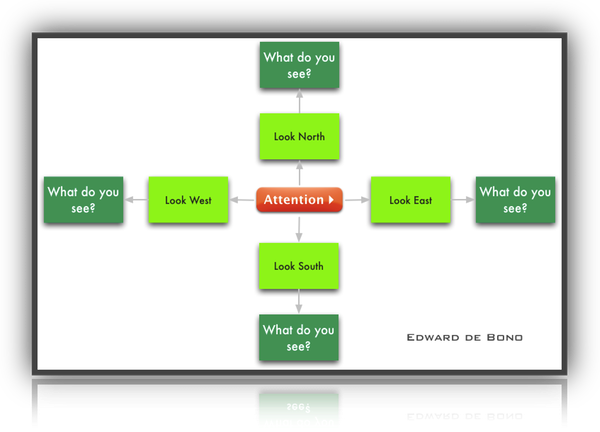
bbx The disparate thoughts on this page are some of what can be seen by attention directing — looking north, south, east, and west around the landscape of the unfolding world

bbx Imagine this attention directing taking place by decade or less

bbx In addition to looking for and at things that aren’t on our radar, we need a way to narrow down the infinite number of things we could look at and spend our time doing.

bbx The things we decide to do need to rest on a solid foundation for future directed decisions — the contents and links on this page plus additional exploration.

bbx The purpose of the entire site: preparing for a different world and different future across multiple time spans in one’s life and the lives of those connected to you through time: associates in your organizations across time and parent to child to grandchild. You can only do this with what’s on your radar.

More major brainroads to explore:

bbx A society of organizations

bbx What do you want to be remembered for?

bbx Career and life guidance from Peter Drucker

bbx CEO work area landscapes


As a part of the work approach prototype there is lots of exploration along with creating a radar list of attractive time investments.

The exploration takes place across a multidimensional conceptual landscape or brainscape. The exploration involves attention directing that helps create a foundation for future directed decisions. Part of this foundation involves examining some common assumptions.

What follows is a brainroad for exploration and action thinking. When you've explored …, you can say to yourself: “My brain has been down that road.” You can only work on and with the things on your radar and those things can only come from traveling a brainroad. You can only navigate toward the things, places etc. on your radar. Try as hard as you might your radar will most likely be history based while the world in moving forward.

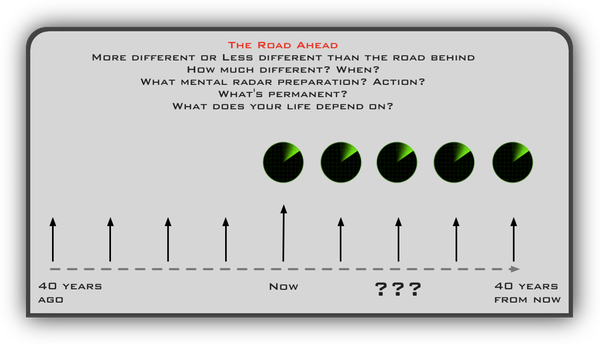
road ahead

As you “visit” each topic along the road …

brain topo

What do you want to harvest and act on?
What will it mean for your life? (calendarize this?)

radar list

Radar system and radar list

We can only work on and with the things on our radar

Scrivener and Aeon Timeline could also be used
for note-taking and sequencing

finding our way

Without some kind of intervention we work
on the familiar with the familiar — a recipe for trouble.

“To know and not do, is to not yet know”


Are you so busy with routines,
texting, social networking, talking on your cell phone
that you haven't noticed …


The Sweep of History and Thinking about Time usage


Trying to predict the future is like driving down a country road at night with no headlights on and looking out the back window — Peter Drucker.

Extrapolating yesterdayS is a fruitless attempt to predict the future.

Check it out!

The human brain is a history library that has to run in future tense — Edward de Bono

sweep of history

situation exploration gone with the wind End of economic man Concept of the corporation The Age of Discontinuity Post capitalist society Management Challenges for the 21st Century Managing in the Next Society situation exploration Look NSEW Downton Abbey World War I planes World War II planes

books and illustrations above have links

Larger

how different

How have you organized yourself to live in this world?

Based on what you see happening in the society of organizations
is your approach adequate to the and your challenges ahead?

How could you test it?


The future is between the ears

“It hasn’t happened, so it won’t happen”

“We are doing great so we have no need to be concerned with the future”

gone with the wind


Imagine yourself back in 1950 or 1980 or 2000 listening to all the yada, yada, yada — including “facts,” data, logic. How much of it had any predictive or constructive value? How could this insight be integrated into your time usage?

Or imagine someone in the past trying to plan their future. Its almost hopeless because the future is unpredictable at work, at home, everywhere. The destinations in life are like an ice floe. Constantly shifting positions. New blocks appearing. Old blocks disappearing or becoming unstable (Kodak, HP, RIM, …) 50% divorce rate, global conflicts, terrorism.

ice floe

“Corporations once built to last like pyramids are now more like tents.

Tomorrow they’re gone or in turmoil.

And this is true not only of companies in the headlines like ….

the platform is burning

The platform is burning

being able to swim

Looking for a new home


Technology is changing very quickly, as are markets and structures.

You can’t design your life around a temporary organization.”
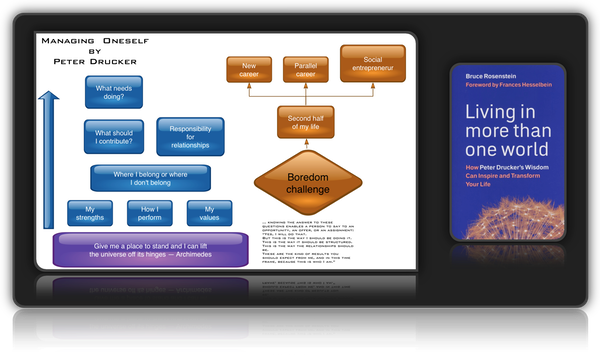
managing oneself and living in more than one world

Larger

Successful careers are not planned

They develop when people are prepared
for opportunities
because they know
their strengths,
their method of work, and
their values.

Knowing where one belongs
can transform an ordinary person
—hardworking and competent but otherwise mediocre—
into an outstanding performer.

Managing Oneself and Living in More than One World

To get the benefits you have to calendarize these

From Interview: Post-Capitalist Executive
found in Managing in a Time of Great Change


“Of course innovation is risky. But so is stepping into the supermarket for a loaf of bread. All economic activity is by definition ‘high risk.’ And defending yesterday — that is, not innovating — is far more risky than making tomorrow.” — Inside Drucker's Brain. Find “10 Making the Future Today” and then “change agent” in Management, Revised Edition.

Abandonment comes first. … But if it is known throughout the organization that the dead will be left to bury their dead, then the living will be willing — indeed, eager — to go to work on innovation. — Innovation and Entrepreneurship


There are enormous opportunities, because change is opportunity — Managing for the Future


out of africa

Larger or Karen Blixen


compass Because we live in a changing world — and other reasons — we need a way to force ourselves to look for and at things that aren't on our radar (another way of saying exploration) and decide what to do about them.

sit

attemtion

Exploration is attention directing.

Writing out what you see
is different from saying it
mentally or verbally. It makes you decide.
And then having the courage to dig deeper and test.

Additionally, what are the implications of what you see?

Maybe this will help you SEE!

Thinking Broad and Thinking Detailed by Edward de Bono

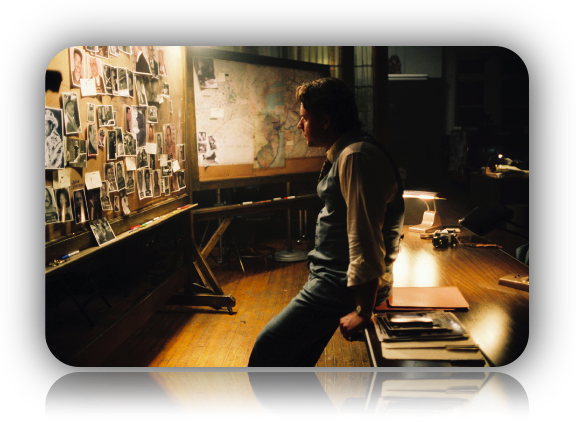
The disparate thoughts on this page are some of what can be seen by looking north, south, east, and west around the landscape of the unfolding world in which we are embedded. This world is different from the world into which my mother was born — image below. It is different and it is not standing still and it is not moving linearly.

earlier bob emby

No century in human history has experienced so many social transformations and such radical ones as the twentieth century. They, I submit, shall turn out to be the most significant events of this our century, and shall be its lasting legacy. In the developed free-market countries—only one-fifth of the earth’s population, but the model for the rest—work and work-force, society and polity are all, in the last decade of this century, qualitatively and quantitatively different both from those of the first years of this century and from anything ever experienced before in human history: different in their configurations, in their processes, in their problems, and in their structures. A Century of Social Transformation by Peter Drucker


… “Power has to be used. It is a reality. If the decent and idealistic toss power in the gutter, the guttersnipes pick it up. If the able and educated refuse to exercise power responsibly, irresponsible and incompetent people take over the seats of the mighty and the levers of power. Power not being used for social purposes passes to people who use it for their own ends. At best it is taken over by the careerists who are led by their own timidity into becoming arbitrary, autocratic, and bureaucratic.”

How Can The Individual Survive?
The Age of Discontinuity: Guidelines To Our Changing Society
by Peter Drucker


This page and its links are 800 pound gorilla stuff that stretches out over decades. This site is an action system and not an article. Part of taking action is getting a “feel” for the road ahead.

This page is not a description of how things are done in this world. It is about the road ahead of you, not the road behind. Every topic is an opportunity to stop and create a mental worldview snapshot and movie of how the world works using the topic as an idea seed to explore.

Attention, we are going to start looking north, south, east, and west. In the real world things are happening in all kinds of different directions. As in the real world you have to make connections — remember Working Girl?


How’s your imagination? Imagine you’ve just been told you no longer have a job. Stop and think about it for a few minutes — seriously. How would you feel? Think about how you’ve spent your time over the years and what it has equipped you to do in the world of now. … You may have a real life adventure ahead of you.

Starting Over is the New Norm

… In this age of corporate downsizing, mergers, outsourcing, layoffs, and mass dismissals, you may well have to come to terms with the idea that job security is rarely something to count on. … .

In short, the era of the paternal corporation that took care of people from cradle to crypt is over. Many studies show that a typical professional in this early part of the new millennium will need to change jobs six or seven times. That means that you have to be prepared to start over and over again.

On the face of it, that may seem daunting. Anyone who’s been fired knows how terrifying it is to be stripped suddenly of job security, not to mention a regular income. Foreclosures suddenly stare you in the face. Health insurance is gone. There’s the social embarrassment of being canned from one’s job. Marriages sometimes unravel as economic circumstances worsen. …

What preparation is required? See the article for his response. …

OR

What are the opportunities that time and history have placed or will place within your grasp? Or maybe within someone else's grasp that might have a positive meaning for you.

What preparation is required? Opportunity Favors the Prepared Mind.

How can you get to tomorrowS by just piling up more todayS?

The End of Economic Man: The Origins of Totalitarianism


What do you want to put into your life and what do you want to get out of it?

These are just a few of the questions that Peter Drucker often asked. Arriving at workable answers requires some mental exploration — over a life-time.

Can you think of anyone whose life turned out to be a positive Real Life Adventure worth remembering? Does everyone having a life worth remembering also automatically have a Real Life Adventure?

Do you see the connection to social and economic development?

rlaexpsys

Larger

A constellation of elements to connect: life in time; a changing world; the need for exploration; roads ahead; decisions for the future in the worldS of the future; learning (not school learning but leaning that becomes a part of you), action, reflection etc. Repeat and repeat and repeat !!!

You can make all the plans you will, plot to make a fortune in the commodities market, speculate on developing trends: all will likely come to naught, for “however carefully you plan for the future, someone else’s actions will inevitably modify the way your plans turn out.” — James Burke from his book Connections

How would you calendarize this?


There are over 500+ HTML pages on this site and this is just one of several entry points.

bbx If you're just starting out, early career work may be your best use of time.


bbx If you just want to remain in the “rat race” and be a “cog” in someone else's grand design — fading into the past — the range of concepts presented on this site may not be for you.

It would still be a good idea to explore the concepts related to knowledge specialty, managing oneself, creating a noncompetitive life and Living in More Than One World: How Peter Drucker's Wisdom Can Inspire Your Life by Bruce Rosenstein.


Looking down the “rat race” road: Years ago I was a Fortune 200 corporate restructurer. The only time that most people (99.3%) really wake up is when they are told its time to clean out their desk. At this point they have no lead time left. At this point a very few might realize that their activities and tasks had been a waste of time and that their performance reports had fooled them. Their time management system has failed them.

The Five Deadly Business Sins

Out of the millions of employees paid by big companies that get into trouble there isn't a single person considered qualified to be their CEO.

Who Says Elephants Can't Dance?: Leading a Great Enterprise through Dramatic Change by Louis V. Gerstner, Jr.

99.3 % :) of people apparently think they have gotten along just fine without being concerned with their future in the world. They probably never considered that this unthinking assumption lies behind every major crisis. Eventually their future arrives and it is always different and different from what could be expected.

Don't let financial results fool you. Companies fail at the height of their success. Some people get raises and get promoted in failing companies, but what comes next? Promotions don't automatically confer new levels of competence.

All of the hype on productivity apps and practices is largely a sales gimmick to get your money, waste your time and not really move you further down the road. See The New Productivity Challenge and Knowledge: Its Economics and Productivity.

Few outsiders seem to realize that the resources and efforts of these companies were inadequate to the challenges because the vast majority of outsiders keep copying the same inside-out, yesterday is going to last forever behaviors … that lead to the demise.

Adding the world's most advanced computers and other gimmicks to a 1950s organization doesn't change the value of the organization's offering to its end-users.

Only the Paranoid Survive

Corporate Loyalty by Mike Kami from Management Alert: Don't Reform—Transform!

Large organizations were proud of their employees' loyalty, dedication, and morale.

These were considered the key attributes of corporate success.

Times changed.

Total employment of Fortune 500 companies is much smaller today than it was 10 years ago.

Big companies shed millions of employees.

Lifetime employment is gone in America and shrinking in Japan.

Employees are aware that job security ain't what it used to be and are concerned.

Personnel surveys show low employee morale and low job satisfaction.

What's the solution?


It's a combination of extremes: temps and core.

Manpower, Inc. is the world's largest temporary employment agency with over 600,000 available workers.

They and others dispatch 1.5 million people to do various temporary chores, three times more than a decade ago.

But that's just a small part of the 34 million people who work intermittently as self-contractors, supplementals, perdiems, lessees, and peripherals.

Part-time workers are not all laborers.

They are also doctors, teachers, lawyers, engineers, scientists, accountants, computer specialists, and veterinarians.

A small firm specializes in placing temporary CEOs, COOs, and CFOs.

Contrary to conventional wisdom, almost 90 percent of part-timers would prefer a steady full-time job.

They're the involuntary contingent.

Practicality dictates the use of part-time employees to increase organizational flexibility and reduce the break-even point.

It's called accordion management.


The advantages and disadvantages are many.

The company saves on costs of benefits, training, severance pay, and firing hassles.

The adverse effects are also obvious.

The company faces lack of loyalty, continuity, incentive, career advancement, and teamwork.

The solution is to compensate for the disadvantages with core employees.

They're your pool of talent for the core competencies absolutely essential in any business.

These people must be talented, dedicated, knowledgeable and loyal.

They are the people you must love, protect, train, overpay, and coddle.

They are the business.

They must be treated as individuals in a tailor-made manner.

Today's enterprises must operate on both extremes of company loyalty: none and high.

The middle is unproductive and dangerous.

It's a different world and a different situation.

Personnel executives must understand it, adapt to it, and act on it.

Do not underestimate the role and the importance of personnel management or compare it to the past.

It's a totally new ball game.

The Shakeout (calendarize this?)

The “shakeout” sets in as soon as the “window” closes.

And the majority of ventures started during the “window” period do not survive the shakeout, as has already been shown for such high-tech industries of yesterday as railroads, electrical apparatus makers, and automobiles.

As these lines are being written, the shakeout has begun among microprocessor, minicomputer, and personal computer companies—only five or six years after the “window” opened.

Today, there are perhaps a hundred companies in the industry in the United States alone.

Ten years hence, by 1995, there are unlikely to be more than a dozen left of any size or significance.


But which ones will survive, which ones will die, and which ones will become permanently crippled—able neither to live nor to die—is unpredictable.

In fact, it is futile to speculate.

Sheer size may ensure survival.

But it does not guarantee success in the shakeout, otherwise Allied Chemical rather than DuPont would today be the world’s biggest and most successful chemical company.

In 1920, when the “window” opened for the chemical industry in the United States, Allied Chemical looked invincible, if only because it had obtained the German chemical patents which the U.S. government had confiscated during World War I.

Seven years later, after the shakeout, Allied Chemical had become a weak also-ran.

It has never been able to regain momentum.


No one in 1949 could have predicted that IBM would emerge as the computer giant, let alone that such big, experienced leaders as G.E. or Siemens would fail completely.

No one in 1910 or 1914 when automobile stocks were the favorites of the New York Stock Exchange could have predicted that General Motors and Ford would survive and prosper and that such universal favorites as Packard or Hupmobile would disappear.

No one in the 1870s and 1880s, the period in which the modern banks were born, could have predicted that Deutsche Bank would swallow up dozens of the old commercial banks of Germany and emerge as the leading bank of the country.


That a certain industry will become important is fairly easy to predict.

There is no case on record where an industry that reached the explosive phase, the “window” phase, as I called it, has then failed to become a major industry.

The question is, Which of the specific units in this industry will be its leaders and so survive?


This rhythm—a period of great excitement during which there is also great speculative ferment, followed by a severe “shakeout”—is particularly pronounced in the high-tech industries.


In the first place, such industries are in the limelight and thus attract far more entrants and far more capital than more mundane areas.

Comments by Warren Buffett.

Also the expectations are much greater.

More people have probably become rich building such prosaic businesses as a shoe-polish or a watchmaking company than have become rich through high-tech businesses.

Yet no one expects shoe-polish makers to build a “billion-dollar business,” nor considers them a failure if all they build is a sound but modest family company.

(Managing the Family Business: see December 28 and 29 in The Daily Drucker)

High tech, by contrast, is a “high-low game,” in which a middle hand is considered worthless.

And this makes high-tech innovation inherently risky.


But also, high tech is not profitable for a very long time.

The world’s computer industry began in 1947-48.

Not until the early 1980s, more than thirty years later, did the industry as a whole reach break-even point.

To be sure, a few companies (practically all of them American, by the way) began to make money much earlier.

And one, IBM, the leader, began to make a great deal of money earlier still.

But across the industry the profits of those few successful computer makers were more than offset by the horrendous losses of the rest; the enormous losses, for instance, which the big international electrical companies took in their abortive attempts to become computer manufacturers.


And exactly the same thing happened in every earlier “high-tech” boom—in the railroad booms of the early nineteenth century, in the electrical apparatus and the automobile booms between 1880 and 1914, in the electric appliance and the radio booms of the 1920s, and so on.


One major reason for this is the need to plow more and more money back into research, technical development, and technical services to stay in the race.

High tech does indeed have to run faster and faster in order to stand still.


This is, of course, part of its fascination.

But it also means that when the shakeout comes, very few businesses in the industry have the financial resources to outlast even a short storm.

This is the reason why high-tech ventures need financial foresight even more than other new ventures, but also the reason why financial foresight is even scarcer among high-tech new ventures than it is among new ventures in general.

(Find “financial foresight” in Innovation and Entrepreneurship and see chapter 3 in The Changing World of the Executive)


There is only one prescription for survival during the shakeout: entrepreneurial management (described in Chapters 12-15).

What distinguished Deutsche Bank from the other “hot” financial institutions of its time was that Georg Siemens thought through and built the world’s first top management team.

What distinguished DuPont from Allied Chemical was that DuPont in the early twenties created the world’s first systematic organization structure, the world’s first long-range planning, and the world’s first system of management information and control.

Allied Chemical, by contrast, was run arbitrarily by one brilliant egomaniac.

But this is not the whole story.

Most of the large companies that failed to survive the more recent computer shakeout — G.E. and Siemens, for instance—are usually considered to have first-rate management.

And the Ford Motor Company survived, though only by the skin of its teeth, even though it was grotesquely mismanaged during the shakeout years.


Entrepreneurial management is thus probably a precondition of survival, but not a guarantee thereof.

And at the time of the shakeout, only insiders (and perhaps not even they) can really know whether a knowledge-based innovator that has grown rapidly for a few boom years is well managed, as DuPont was, or basically unmanaged, as Allied Chemical was.

By the time we do know, it is likely to be too late.

Innovation and Entrepreneurship

film and camera

five stages of decline

Should you outlive your employing organization’s need for you, prospective future employers might want to know:

bbx Your role in what happened. Apathy, arrogance, and complacency are observable and they sabotage an organization.

bbx What you had been doing to develop yourself to participate in a changing world? Did you look out the window before launching into your efforts?


This site is primarily guided by Peter Drucker's work and Edward de Bono's thinking.

drucker books

Links to the contents of these books are at the bottom of the page

Peter Drucker was a social ecologist and his work is top of the “food chain.” He did not write about: how to fine-tune the world of yesterday — what you primarily see around you and always will, to some degree. In a sense, a social ecologist is the opposite of a subject specialist. A social ecologist is concerned with how the real world works and opportunities.

… Thus, I know what Bagehot meant when he said that he saw himself sometimes as a liberal Conservative and sometimes as a conservative Liberal but never as a “conservative Conservative” or a “liberal Liberal.” — see link above for source


It is almost impossible to overstate Drucker's special nature and broad scope. Even after his death people all over the world honor his birthday with special events.

It is completely impossible to overstate the amount of contradictory yada, yada, yada being spewed into the world by the subject specialist who never look at the big picture.

If you think he writes about things you know better, you're completely missing the point. Imagine you've been given a tennis racquet and you have to play Novak Djokovic, Rafael Nadal, and Roger Federer on global TV with your life at stake. How many people would bet on you?

old

our changing america

old photos

The dying worlds of yesterdays
are always the most visible features
on the social landscape until …


Druckerisms — (calendarize this?)

bbx “The customer never buys what you think you sell. And you don’t know it. That’s why it’s so difficult to differentiate yourself.”

“Economists never know anything until twenty years later. There are no slower learners than economists. There is no greater obstacle to learning than to be the prisoner of totally invalid but dogmatic theories. The economists are where the theologians were in 1300: prematurely dogmatic” — Frontiers of Management

bbx “People in any organization are always attached to the obsolete—the things that should have worked but did not, the things that once were productive and no longer are.”

bbx Follow effective action with quiet reflection. From the quiet reflection will come even more effective action.

The really important things are said over cocktails and are never done. (calendarize this?)

bbx Knowledge has to be improved, challenged, and increased constantly, or it vanishes.

bbx Management by objective works – if you know the objectives. Ninety percent of the time you don’t.

bbx Objectives are not fate; they are direction. They are not commands; they are commitments. They do not determine the future; they are means to mobilize the resources and energies of the business for the making of the future.

bbx Most discussions of decision-making assume that only senior executives make decisions or that only senior executives decisions matter. This is a dangerous mistake.

bbx People who don’t take risks generally make about two big mistakes a year. People who do take risks generally make about two big mistakes a year.

bbx That people even in well paid jobs choose ever earlier retirement is a severe indictment of our organizations — not just business, but government service, the universities. These people don’t find their jobs interesting. (calendarize this?)

bbx Few top executives can even imagine the hatred, contempt and fury that has been created — not primarily among blue-collar workers who never had an exalted opinion of the ‘bosses’ — but among their middle management and professional people. What do you want to be remembered for?

bbx The individual is the central, rarest, most precious capital resource of our society.

The subordinate’s job is not to reform or re-educate the boss, not to make him conform to what the business schools or the management book say bosses should be like. It is to enable a particular boss to perform as a unique individual. (To calendarize this see chapter 46 in Management, Revised Edition)

bbx Far too many people—especially people with great expertise in one area—are contemptuous of knowledge in other areas …

bbx “The proudest boast any executive can make” is to have “built the team that will perpetuate” one’s work, vision and institution

bbx The greatest sin may be the new 20th-century sin of indifference.


Are you able to piece together the various elements in this Drucker section?


compass In addition to looking for and at things that aren't on our radar, we need a way to narrow down the infinite number of things we could look at and spend our time doing.

If it doesn't make any sense to build one's life on weaknesses and things that aren't important to you, then building on strength and values seems to be the way.

managing oneself

Larger

compass The things we decide to do need to rest on a solid foundation for future directed decisions — the contents and links on this page.

bbx Before going on a trip, many people will study a map. Where's the life map? How could anybody in 1950, 1970 … create a life map that they could rely upon? What are the assumptions that might be useful in creating a life map?

bbx America is not going to grow and prosper by people doing what they already are doing and know how to do — connect to the organization crisis stories constantly flowing through the news.

Don't look to politicians for the answer — they don't know anything about creating the future.


Following is from Post-Capitalist Society by Peter Drucker

Post-Capitalist Society
Amazon link: Post-Capitalist Society


line


“EVERY FEW HUNDRED YEARS in Western history there occurs a sharp transformation.

We cross what in an earlier book (The New Realities—1989) I called a “divide.”

Within a few short decades, society rearranges itself—its worldview; its basic values; its social and political structure; its arts; its key institutions.

(Can you identify what these components might be?)
(calendarize this?)

Fifty years later, there is a new world.

And the people born then cannot even imagine the world in which their grandparents lived and into which their own parents were born.


We are currently living through just such a transformation.”

The Limping Middle Class

“It is creating the post-capitalist society, which is the subject of this book.”


“That knowledge has become the resource,
rather than a resource,
is what makes our society “post-capitalist.”


This fact changes—fundamentally—the structure of society.

It creates new social and economic dynamics.

It creates new politics.

The post-capitalist society
is both a knowledge society and a society of organizations,
each dependent on the other and yet
each very different in its concepts, views, and values.


It is the very nature of knowledge
that it changes fast
and that today’s certainties
will be tomorrow’s absurdities.” — PFD


Chapter 3 — Labor, Capital, and Their Future

If knowledge is the resource of post-capitalist society, what then will be the future role and function of the two key resources of capitalist (and socialist) society, labor and capital?


Socially, the new challenges (to be discussed in Chapters 4 “The Productivity of the New Workforces” and 5 “The Responsibility Based Organization” and in the last part of this book — Knowledge: Its Economics and Its Productivity; The Accountable School; The Educated Person) will predominate.

And the success of post-capitalist society will largely depend on our answers to them.

But politically, the unfinished business of capitalist society will be highly visible: the disappearance of labor as a factor of production, and the redefinition of the role and function of traditional capital.


We have moved already into an “employee society” where labor is no longer an asset.

We equally have moved into a “capitalism” without capitalists—which defies everything still considered self-evident truth, if not “the laws of nature,” by politicians, lawyers, economists, journalists, labor leaders, business leaders; in short, by most everybody regardless of political persuasion.

For that reason, these issues will be in the political spotlight in the decades ahead.

To be able to tackle successfully the new challenges of this transition period, we must resolve these two items of unfinished business: the future role and function of labor, and the future role and function of money capital.

See articles in the news for examples.


line


“THE NEW CHALLENGE facing the post-capitalist society is the productivity of knowledge workers and service workers.” (calendarize this?)

“To improve the productivity of knowledge workers will in fact require drastic changes in the structure of the organizations of post-capitalist society, and in the structure of society itself” (managing oneself).

“Even more drastic, indeed revolutionary, are the requirements for obtaining productivity from service workers”


line


For clues to navigating toward tomorrowS … (calendarize these?)

bbx Management’s New Paradigm

bbx Management Challenges for the 21st Century

bbx Managing In The Next Society

The Next Society from the Economist

bbx From Analysis to Perception — The New Worldview

The question of the right size for a given task or a given organization will become a central challenge.

In an information-based society, bigness becomes a “function” and a dependent, rather than an independent, variable.

Increasingly, therefore, the question of the right size for a task will become a central one.

All of them are needed, but each for a different task and in a different ecology.

The right size will increasingly be whatever handles most effectively the information needed for task and function.

See Strategies and Structures in Management: Tasks, Responsibilities, Practices


The productivity of knowledge is going to be the determining factor in the competitive position of a company, an industry, an entire country.

No country, industry, or company has any “natural” advantage or disadvantage.

The only advantage it can possess is the ability to exploit universally available knowledge.

The only thing that increasingly will matter in national as in international economics is management's performance in making knowledge productive.Knowledge: its economics and productivity


Knowledge workers will increasingly determine the shape of the successful employing organizations. — Management, Revised Edition !!!


In the knowledge society, it is not the individual who performs.

The individual is a cost center rather than a performance center.

It is the organization that performs. (Across multiple time dimensions: explore the life stories of HP, Kodak, RIM or RCA) — A Century of Social Transformation by Peter Drucker


Executive Jobs and Growth

You have to learn to manage in situations where you don’t have command authority, where you are neither controlled nor controlling. That is the fundamental change. Management textbooks still talk mainly about managing subordinates. But you no longer evaluate an executive in terms of how many people report to him or her. That standard doesn’t mean as much as the complexity of the job, the information it uses and generates, and the different kinds of relationships needed to do the work.

Similarly, business news still refers to managing subsidiaries. But this is the control approach of the 1950s or 1960s. The reality is that the multinational corporation is rapidly becoming an endangered species. Businesses used to grow in one of two ways: from grass-roots up or by acquisition. In both cases, the manager had control. Today businesses grow through alliances, all kinds of dangerous liaisons and joint ventures, which, by the way, very few people understand. This new type of growth upsets the traditional manager, who believes he or she must own or control sources and markets.


Moving Beyond Capitalism?

… Of late, some of capitalism’s biggest boosters, people such as yourself and the financier George Soros, have become its biggest critics. What is your critique?

I am for the free market. Even though it doesn’t work too well, nothing else works at all. But I have serious reservations about capitalism as a system because it idolizes economics as the be-all and end-all of life. It is one-dimensional.

For example, I have often advised managers that a 20-1 salary ratio is the limit beyond which they cannot go if they don’t want resentment and falling morale to hit their companies. I worried back in the 1930s (The End of Economic Man) that the great inequality generated by the Industrial Revolution would result in so much despair that something like fascism would take hold. Unfortunately, I was right.

Today, I believe it is socially and morally unforgivable when managers reap huge profits for themselves but fire workers. As societies, we will pay a heavy price for the contempt this generates among the middle managers and workers.

In short, whole dimensions of what it means to be a human being and treated as one are not incorporated into the economic calculus of capitalism. For such a myopic system to dominate other aspects of life is not good for any society.

With regard to the market, there are several serious problems with the theory itself.

First of all, the theory assumes there is one homogeneous market. In reality, there are three overlapping markets that, by and large, don’t interchange: an international market in money and information, national markets, and local markets.

Most of what passes for transnational economic money, of course, is only virtual money.

The London interbank market each day has a greater volume of activity in dollar terms than the whole world would need for a year to finance all economic transactions.

This is functionless money. It cannot possibly earn any return since it serves no function. It has no purchasing power. It is, therefore, totally speculative and prone to panics as it rushes here and there to earn that last 64th of 1 percent.

Then, there is a large national economy which is not exposed to international commerce. Some 24 percent of U.S. economic activity is exposed to trade. In Japan, it is only 8 percent.

Then there is the local economy. The hospital near my home has very high-quality care and is very competitive. But it does not compete with any hospital forty miles away in Los Angeles. The effective market area for hospitals in the U.S. is about ten miles because, for some obscure reason no economist would be able to figure out, people like to be close to their sick mothers.

Also, what drives markets has changed. The economic center of gravity shifted sometime during this century. In the nineteenth century, with steel and steam, supply generated demand. Since the Great Depression, however, the tables have turned: In traditional products, from home construction to cars, demand must come before supply although this is not yet true today of information and electronics, which stimulate demand.

Beyond this definition of markets, the truly profound issue is that market theory is based on an assumption of equilibrium and thus cannot accommodate change, let alone innovation.

Rather, the real pattern of economic activity, as Joseph Schumpeter recognized as long ago as 1911, is “a moving disequilibrium” caused by the process of creative destruction as new markets with new products and new demand are made at the expense of old ones.

Market outcomes cannot, therefore, be explained in terms of what the theory would have predicted. The market is in fact not a predictable system, but inherently unstable. And if it is not predictable, you cannot base your behavior on it. That is a pretty serious limitation for a theory of human behavior.

All we can say is that, in the end, any long-term equilibrium is the result of a lot of short-term adaptations to market signals.

This, finally, is the strength of the market: It is a disciplinarian for the short term. By providing feedback through prices, it discourages you from squandering time and resources going off in all directions like King Arthur’s knights.

The old idea was that if you rode on long enough you would run into something. The market tells you that if you don’t run into something in five weeks, you better change course or do something else.

Beyond the short term, the market is useless. You know, I have sat in on more than my share of research planning for large companies. Fundamentally, this activity is an act of faith. When the chief financial officer asks, as he always does, “What will be the return?” on this or that project, the only answer is “We will know in ten years.”

Years ago you wrote about pension fund ownership of the American economy, calling it “capitalism sans capitalists” where workers’ retirement funds own the means of production. Today, this dispersion of wealth has gone even further through the explosion of mutual funds—more than 51 percent of Americans own shares of stock. Have we arrived at mass capitalism or post-capitalism?

Well, to call it post-capitalism is merely to say we don’t know what to call it.

You also can’t call it economic democracy since there is no organized form of governance associated with this mass ownership.

What is certain is that it is a totally new phenomenon in history. …

Managing in the Next Society
Peter Drucker


The Manufacturing Paradox

In the closing years of the twentieth century, the world price of the steel industry’s biggest single product—hot-rolled coil, the steel for car bodies—plunged from $460 to $260 a ton. Yet these were boom years in America and prosperous times in most of continental Europe, with automobile production setting records. The steel industry’s experience is typical of manufacturing as a whole. Between 1960 and 1999, both manufacturing’s share in America’s GDP and its share of total employment roughly halved, to around 15 percent. Yet in the same forty years manufacturing’s physical output doubled or tripled. In 1960, manufacturing was the center of the American economy, and of the economies of all other developed countries. By 2000, as a contributor to GDP it was easily outranked by the financial sector.

The relative purchasing power of manufactured goods (what economists call the terms of trade) has fallen by three-quarters in the past forty years. Whereas manufacturing prices, adjusted for inflation, are down by 40 percent, the prices of the two main knowledge products, health care and education, have risen about three times as fast as inflation. In 2000, therefore, it took five times as many units of manufactured goods to buy the main knowledge products as it had done forty years earlier.

The purchasing power of workers in manufacturing has also gone down, although by much less than that of their products. Their productivity has risen so sharply that most of their real income has been preserved. Forty years ago, labor costs in manufacturing typically accounted for around 30 percent of total manufacturing costs; now they are generally down to 12-15 percent. Even in cars, still the most labor-intensive of the engineering industries, labor costs in the most advanced plants are no higher than 20 percent. Manufacturing workers, especially in America, have ceased to be the backbone of the consumer market. At the height of the crisis in America’s “rust belt,” when employment in the big manufacturing centers was ruthlessly slashed, national sales of consumer goods barely budged.

What has changed manufacturing, and sharply pushed up productivity, are new concepts. Information and automation are less important than new theories of manufacturing, which are an advance comparable to the arrival of mass production eighty years ago. Indeed, some of these theories, such as Toyota’s “lean manufacturing,” do away with robots, computers, and automation. One highly publicized example involves replacing one of Toyota’s automated and computerized paint-drying lines by half a dozen hair-dryers bought in a supermarket.

Manufacturing is following exactly the same path that farming trod earlier. Beginning in 1920, and accelerating after the Second World War, farm production shot up in all developed countries. Before the First World War, many Western European countries had to import farm products. Now there is only one net farm importer left: Japan. Every single European country now has large and increasingly unsalable farm surpluses. In quantitative terms, farm production in most developed countries today is probably at least four times what it was in 1920 and three times what it was in 1950 (except in Japan). But whereas at the beginning of the twentieth century farmers made up the largest single group in the working population in most developed countries, now they account for no more than 3 percent in any developed country. And whereas at the beginning of the twentieth century agriculture was the largest single contributor to national income in most developed countries, in 2000 in America it contributed less than 2 percent to GDP.

Manufacturing is unlikely to expand its output in volume terms as much as agriculture did, or to shrink as much as a producer of wealth and of jobs. But the most believable forecast for 2020 suggests that manufacturing output in the developed countries will at least double, while manufacturing employment will shrink to 10-12 percent of the total workforce.

Managing in the Next Society

Apple doubles its nearest Android competitor in market share

If you look at the chart below from Nielsen, you’ll see that Android has 51.8 percent of the smartphone market share and Apple has 34.3 percent.

Look at it again. Not a single Android-based smartphone even comes close to Apple’s market share. In fact, Apple doubles its nearest competitor, Samsung, which has 17 percent market share. Also consider that each of those manufacturers have a variety of smartphones available on the market at the same time. Apple has a couple of iPhones.

smart phones

What are the productivity and survivability implications?

knowledge technology

Larger

It is the very nature of knowledge
that it changes fast and
that today's certainties
will be tomorrow's absurdities. — Peter Drucker


Because the knowledge society
perforce has to be
a society of organizations,
its central and distinctive organ is
management.

When we first began to talk of management, the term meant “business management” — since large-scale business was the first of the new organizations to become visible.

But we have learned this last half-century that management is the distinctive organ of all organizations.

All of them require management—whether they use the term or not.

All managers do the same things whatever the business of their organization.

All of them have to bring people—each of them possessing a different knowledge—together for joint performance.

All of them have to make human strengths productive in performance and human weaknesses irrelevant.

All of them have to think through what are “results” in the organization—and have then to define objectives.

All of them are responsible to think through what I call the “theory of the business,” that is, the assumptions on which the organization bases its performance and actions, and equally, the assumptions which organizations make to decide what things not to do.

theory of the business

Communicate and Test Assumptions

The theory of the business must be known and understood throughout the organization.

This is easy in an organization’s early days.

But as it becomes successful, an organization tends increasingly to take its theory for granted, becoming less and less conscious of it.

Then the organization becomes sloppy.

It begins to cut corners.

It begins to pursue what is expedient rather than what is right.

It stops thinking.

It stops questioning.

It remembers the answers but has forgotten the questions.

The theory of the business becomes “culture.”

But culture is no substitute for discipline, and the theory of the business is a discipline.


The theory of the business has to be tested constantly.

It is not graven on tablets of stone.

It is a hypothesis.

And it is a hypothesis about things that are in constant flux—society, markets, customers, technology.

And so, built into the theory of the business must be the ability to change itself.

Some theories are so powerful that they last for a long time.

Eventually every theory becomes obsolete and then invalid.

It happened to the GMs and the AT&Ts.

It happened to IBM.

It is also happening to the rapidly unraveling Japanese keiretsu.

4 JUL The Daily Drucker


All of them require an organ that thinks through strategies, that is, the means through which the goals of the organization become performance.

All of them have to define the values of the organization, its system of rewards and punishments, and with its spirit and its culture.

In all of them, managers need both

the knowledge of management as work and discipline,

and

the knowledge and understanding of the organization itself

its purposes,
its values,
its environment and markets,
its core competencies.

A Century of Social Transformation by Peter Drucker


Management, that is, the “useful knowledge” that enables man for the first time (in human history — bobembry) to render productive people of different skills and knowledge working together in an “organization,” is an innovation of this century. It has converted modern society into something brand new, something, by the way, for which we have neither political nor social theory: a society of organizations.


Mission

An institution exists for a specific purpose and mission, a specific social function.

In the business enterprise, this means economic performance.


With respect to this first task, the task of specific performance, business and nonbusiness institutions differ.

In respect to every other task, they are similar.

But only business has economic performance as its specific mission.

It is the definition of a business that it exists for the sake of economic performance.

In all other institutions—hospital, church, university, or armed services—economics is a restraint.

In those institutions, the budget sets limits to what the institution and the manager can do.

In business enterprise, economic performance is the rationale and purpose.


Business management must always, in every decision and action, put economic performance first.

It can justify its existence and its authority only by the economic results it produces.

A business management has failed if it fails to produce economic results.

It has failed if it does not supply goods and services desired by the consumer at a price the consumer is willing to pay.

It has failed if it does not improve, or at least maintain, the wealth-producing capacity of the economic resources entrusted to it.

And this, whatever the economic or political structure or ideology of a society, means responsibility for profitability.


But business management is no different from the management of other institutions in one crucial respect: it has to manage.

And managing is not just passive, adaptive behavior; it means taking action to make the desired results come to pass.


The early economist conceived of the businessman’s behavior as purely passive; success in business meant rapid and intelligent adaptation to events occurring outside, in an economy shaped by impersonal, objective forces that were neither controlled by the businessman nor influenced by his reaction to them.

We may call this the concept of the “trader.”

Even if he was not considered a parasite, his contributions were seen as purely mechanical: the shifting of resources to more productive use.

Today’s economist sees the businessman as choosing rationally between alternatives of action.

This is no longer a mechanistic concept; obviously the choice has a real impact on the economy.

But still, the economist’s “businessman”—the picture that underlies the prevailing economic “theory of the firm” and the theorem of the “maximization of profits”—reacts to economic developments.

The businessperson is still passive, still adaptive—though with a choice among various ways to adapt.

Basically, this is a concept of the “investor” or the “financier” rather than of the manager.


Of course, it is always important to adapt to economic changes rapidly, intelligently, and rationally.

But managing implies responsibility

for attempting to shape the economic environment;

for planning, initiating, and carrying through changes in that economic environment;

for constantly pushing back the limitations of economic circumstances on the enterprise’s ability to contribute.

What is possible—the economist’s “economic conditions”—is therefore only one pole in managing a business.

What is desirable in the interest of economy and enterprise is the other.

And while humanity can never really “master” the environment, while we are always held within a tight vise of possibilities, it is management’s specific job to make what is desirable first possible and then actual.

Management is not just a creature of the economy; it is a creator as well.

And only to the extent to which it masters the economic circumstances, and alters them by consciously directed action, does it really manage.

To manage a business means, therefore, to manage by objectives

Chapter 3, Management, Revised Edition


Purpose and Objectives First

To Drucker, strategy, like everything else in management, is a thinking person’s game.

It isn’t arrived at by following some rigid set of rules but by thinking through various aspects of the business.


It all starts with objectives.

“Only a clear definition of the mission makes possible clear and realistic business objectives.

It is the foundation for priorities, strategies, plans and work assignments.

It is the starting point for the design of managerial jobs, and, above all, for the design of managerial structures.

Structure follows strategy.

Strategy determines what the key activities are in a given business.

And strategy requires knowing what our business is and what it should be.”


Drucker also explained that “nothing may seem simpler or more obvious than to answer what a company’s business is.

A steel mill makes steel, a railroad runs to carry freight and passengers … .

Actually ‘what is our business?’ is almost always a difficult question which can be answered only after hard thinking and studying.

And the right answer is usually anything but obvious.”


Thinking back to Drucker’s Law, no strategy can be created without the customer, for it is the customer who defines business purpose.

And “therefore the question ‘what is our business?’ can be answered only by looking at the business from the outside, from the point of view of the customer and the market.

What the customer sees, thinks, believes and wants at any given time must be accepted by management as an objective fact deserving to be taken as seriously” as any hard data collected from salespeople, accountants, or engineers, contended Drucker.


Drucker claimed that the single most important cause of business failure can be attributed to management’s failure to ask the question “what is our business?” in a “clear and sharp form.”

And it isn’t only when a company is starting out that the question should be asked, or when the company is in trouble.

“On the contrary,” Drucker wrote, “to raise the question and to study it thoroughly is most needed when a business is successful.

For then failure to raise it may result in rapid decline.”

Inside Drucker's Brain

A product or service name is never an effective answer to these questions because it doesn’t specify the specific contribution to the customer that matches what customers value and pay for — they buy what it does for them. See “The Customer: Joined at the Hip” in The Definitive Drucker and “Changing Values and Characteristics (creating a customer)” in Innovation and Entrepreneurship — bobembry


The view of management presented above is the opposite of inside-out behavior

AS WE ADVANCE deeper into the knowledge economy, the basic assumptions underlying much of what is taught and practiced in the name of management are hopelessly out of date. — Management's New Paradigm


High tech is living in the nineteenth century, the pre-management world. They believe that people pay for technology. They have a romance with technology. But people don't pay for technology: they pay for what they get out of technology. The Frontiers of Management


The Function Of Organizations

The function of organizations is to make knowledges productive. Organizations have become central to society in all developed countries because of the shift from knowledge to knowledges.

The more specialized knowledges are, the more effective they will be. The best radiologists are not the ones who know the most about medicine; they are the specialists who know how to obtain images of the body's inside through X-ray, ultrasound, body scanner, magnetic resonance. The best market researchers are not those who know the most about business, but the ones who know the most about market research. Yet neither radiologists nor market researchers achieve results by themselves; their work is "input" only. It does not become results unless put together with the work of other specialists.

Knowledges by themselves are sterile.

They become productive only if welded together into a single, unified knowledge.

To make this possible is the task of organization, the reason for its existence, its function.

Peter Drucker, Post-Capitalist Society


Changing Values and Characteristics

From chapter 19 of Innovation and Entrepreneurship by Peter Drucker

innovation & entrepreneurship

Amazon link: Innovation and Entrepreneurship


In the entrepreneurial strategies discussed so far, the aim is to introduce an innovation.

In the entrepreneurial strategy discussed in this chapter, the strategy itself is the innovation.

The product or service it carries may well have been around a long time—in our first example, the postal service, it was almost two thousand years old.

But the strategy converts this old, established product or service into something new.

It changes its utility, its value, its economic characteristics.

While physically there is no change, economically there is something different and new.


All the strategies to be discussed in this chapter have one thing in common.


They create a customer — and that is the ultimate purpose of a business, indeed, of economic activity.

As was first said more than thirty years ago in my The Practice of Management (New York: Harper & Row, 1954).

But they do so in four different ways:

bbx by creating utility

bbx by pricing

bbx by adaptation to the customer’s social and economic reality

bbx by delivering what represents true value to the customer

... snip, snip ...

These examples are likely to be considered obvious.

Surely, anybody applying a little intelligence would have come up with these and similar strategies?

But the father of systematic economics, David Ricardo, is believed to have said once, “Profits are not made by differential cleverness, but by differential stupidity.”

The strategies work, not because they are clever, but because most suppliers—of goods as well as of services, businesses as well as public-service institutions—do not think.

They work precisely because they are so “obvious.”

Why, then, are they so rare?

For, as these examples show, anyone who asks the question, What does the customer really buy? will win the race.

In fact, it is not even a race since nobody else is running.

What explains this?


One reason is the economists and their concept of “value.”

Every economics book points out that customers do not buy a “product,” but what the product does for them.

And then, every economics book promptly drops consideration of everything except the “price” for the product, a “price” defined as what the customer pays to take possession or ownership of a thing or a service.

What the product does for the customer is never mentioned again.

Unfortunately, suppliers, whether of products or of services, tend to follow the economists.


It is meaningful to say that “product A costs X dollars.”

It is meaningful to say that “we have to get Y dollars for the product to cover our own costs of production and have enough left over to cover the cost of capital, and thereby to show an adequate profit.”

But it makes no sense at all to conclude and therefore the customer has to pay the lump sum of Y dollars in cash for each piece of product A he buys.”

Rather, the argument should go as follows: “What the customer pays for each piece of the product has to work out as Y dollars for us.

But how the customer pays depends on what makes the most sense to him.

It depends on what the product does for the customer.

It depends on what fits his reality.

It depends on what the customer sees as ‘value.’”


Price in itself is not “pricing,” and it is not “value.”

It was this insight that gave King Gillette a virtual monopoly on the shaving market for almost forty years; it also enabled the tiny Haloid Company to become the multibillion-dollar Xerox Company in ten years, and it gave General Electric world leadership in steam turbines.

In every single case, these companies became exceedingly profitable.

But they earned their profitability.

They were paid for giving their customers satisfaction, for giving their customers what the customers wanted to buy, in other words, for giving their customers their money’s worth.


“But this is nothing but elementary marketing,” most readers will protest, and they are right.

It is nothing but elementary marketing.

To start out with the customer’s utility, with what the customer buys, with what the realities of the customer are and what the customer’s values are—this is what marketing is all about.

But why, after forty years of preaching Marketing, teaching Marketing, professing Marketing, so few suppliers are willing to follow, I cannot explain.

The fact remains that so far, anyone who is willing to use marketing as the basis for strategy is likely to acquire leadership in an industry or a market fast and almost without risk.


Entrepreneurial strategies are as important as purposeful innovation and entrepreneurial management.

Together, the three make up innovation and entrepreneurship.


The available strategies are reasonably clear, and there are only a few of them.

But it is far less easy to be specific about entrepreneurial strategies than it is about purposeful innovation and entrepreneurial management.

We know what the areas are in which innovative opportunities are to be found and how they are to be analyzed.

There are correct policies and practices and wrong policies and practices to make an existing business or public-service institution capable of entrepreneurship; right things to do and wrong things to do in a new venture.

But the entrepreneurial strategy that fits a certain innovation is a high-risk decision.

Some entrepreneurial strategies are better fits in a given situation, for example, the strategy that I called entrepreneurial judo, which is the strategy of choice where the leading businesses in an industry persist year in and year out in the same habits of arrogance and false superiority.

We can describe the typical advantages and the typical limitations of certain entrepreneurial strategies.


Above all, we know that an entrepreneurial strategy has more chance of success the more it starts out with the users—their utilities, their values, their realities.

An innovation is a change in market or society.

It produces a greater yield for the user, greater wealth-producing capacity for society, higher value or greater satisfaction.

The test of an innovation is always what it does for the user.

Hence, entrepreneurship always needs to be market-focused, indeed, market-driven.


Still, entrepreneurial strategy remains the decision-making area of entrepreneurship and therefore the risk-taking one.

It is by no means hunch or gamble.

But it also is not precisely science.

Rather, it is judgment.


What do customers value?

The question, What do customers value?—what satisfies their needs, wants, and aspirations—is so complicated that it can only be answered by customers themselves.

And the first rule is that there are no irrational customers.

Almost without exception, customers behave rationally in terms of their own realities and their own situation. (Their logic bubble — see below)

Leadership should not even try to guess at the answers but should always go to the customers in a systematic quest for those answers.

I practice this.

Each year I personally telephone a random sample of fifty or sixty students who graduated ten years earlier.

I ask, “Looking back, what did we contribute in this school?

What is still important to you?

What should we do better?

What should we stop doing?”

And believe me, the knowledge I have gained has had a profound influence.

What does the customer value? may be the most important question.

Yet it is the one least often asked.

Nonprofit leaders tend to answer it for themselves.

“It’s the quality of our programs.

It’s the way we improve the community.”

People are so convinced they are doing the right things and so committed to their cause that they come to see the institution as an end in itself.

But that’s a bureaucracy.

Instead of asking, “Does it deliver value to our customers?” they ask, “Does it fit our rules?”

And that not only inhibits performance but also destroys vision and dedication.

— Peter Drucker,
The Five Most Important Questions


line


Quality

Quality in a product or service is not what the supplier puts in.

It is what the customer gets out and is willing to pay for.

A product is not quality because it is hard to make and costs a lot of money, as manufacturers typically believe.

This is incompetence.

Customers pay only for what is of use to them and gives them value.

Nothing else constitutes quality.

Peter Drucker


line


The Logic Bubble

I (Edward de Bono) created the term ‘logic bubble’ in a previous book.

When someone does something you do not like or with which you do not agree, it is easy to label that person as stupid, ignorant or malevolent.

But that person may be acting ‘logically’ within his or her ‘logic bubble’.

bubble man

That bubble is made up of the perceptions, values, needs and experience of that person.

If you make a real effort to see inside that bubble and to see where that person is ‘coming from’, you usually see the logic of that person’s position.


In the school programme for teaching thinking (CoRT (Cognitive Research Trust) programme) there are tools which broaden perception so the thinker sees a wider picture and acts accordingly.

One of these tools is OPV, which encourages the thinker to ‘see the Other Person’s Point of View’.

We have numerous examples where a serious fight came to a sudden end when the combatants (who had learned the methods) decided to do an OPV on each other, a very similar process to understanding the ‘logic bubble’ of the other party.

Edward de Bono


Freakonomics: A Rogue Economist Explores the Hidden Side of Everything (P.S.)

Communications


The 90/10 Rule at Yum! Brands

But every analysis of actual allocation of resources and efforts in business that I have ever seen or made showed clearly that the bulk of time, work, attention, and money first goes to ‘problems’ rather than to opportunities, and, secondly, to areas where even extraordinarily successful performance will have minimal impact on results. (calendarize this?)

One of the hardest things for a manager to remember is that of the 1,000 different situations he or she will be asked to deal with on any given day, only the smallest handful have a shot at moving the enterprise forward in a truly significant way (calendarize this?)

The job of management, then, is to make sure that financial capital, technology, and top talent are deployed where most of the results are and where most of the costs aren’t. The temptation often exists, however, to do exactly the opposite


See chapter 10, The Bright Idea (the riskiest and least successful source of innovative opportunities) in Innovation and Entrepreneurship


Broken Washroom Doors: Drucker said the problem of having people in positions where they do the least amount of good exists everywhere, but it is more rampant in hospitals, churches, and other nonprofits than in corporations.


To raise productivity in most any organization managers should regularly assess their key people, their strengths, and the results they achieve.

Then they should ask themselves:

Do we have the right people in the right jobs, where they can make the greatest contributions?

Are the jobs the right ones, meaning do we have people performing tasks that even if achieved do not add value to the organization?

What changes in people, jobs, and job functions can we make that will yield greater results?

Inside Drucker's Brain

Competition on the roads ahead

… In the new mental geography created by the railroad, humanity mastered distance. In the mental geography of e-commerce, distance has been eliminated. There is only one economy and only one market.

One consequence of this is that every business must become globally competitive, even if it manufactures or sells only within a local or regional market. The competition is not local anymore—in fact, it knows no boundaries. Every company has to become transnational in the way it is run. Yet the traditional multinational may well become obsolete. It manufactures and distributes in a number of distinct geographies, in which it is a local company. But in e-commerce there are neither local companies nor distinct geographies. Where to manufacture, where to sell, and how to sell will remain important business decisions. But in another twenty years they may no longer determine what a company does, how it does it, and where it does it.

At the same time, it is not yet clear what kinds of goods and services will be bought and sold through e-commerce and what kinds will turn out to be unsuitable for it. This has been true whenever a new distribution channel has arisen. Why, for instance, did the railroad change both the mental and the economic geography of the West, whereas the steamboat—with its equal impact on world trade and passenger traffic—did neither? Why was there no "steamboat boom"?

Equally unclear has been the impact of more recent changes in distribution channels—in the shift, for instance, from the local grocery store to the supermarket, from the individual supermarket to the supermarket chain, and from the supermarket chain to Wal-Mart and other discount chains. It is already clear that the shift to e-commerce will be just as eclectic and unexpected. …

Managing in the Next Society
by Peter Drucker

See Marketing Moves and Chaotics: The Business of Managing and Marketing in the Age of Turbulence

Characteristics of the Next Society

Every institution in the knowledge society has to be globally competitive.

The next society will be a knowledge society. Its three main characteristics will be:

bbx Borderlessness, because knowledge travels even more effortlessly than money.

bbx Upward mobility, available to everyone through easily acquired formal education.

bbx The potential for failure as well as success. Anyone can acquire the “means of production,” that is, the knowledge required for the job, but not everyone can win.

Together, those three characteristics will make the knowledge society a highly competitive one, for organizations and individuals alike.

Information technology, although only one of many new features of the next society, is already having one hugely important effect:

it is allowing knowledge to spread near—instantly, and making it accessible to everyone.

Given the ease and speed at which information travels, every institution in the knowledge society—not only businesses, but also schools, universities, hospitals, and increasingly, government agencies, too—has to be globally competitive, even though most organizations will continue to be local in their activities and in their markets.

This is because the Internet will keep customers everywhere informed on what is available anywhere in the world, and at what price

May 4, The Daily Drucker


… By now everybody at General Motors knows that these are the crucial problems. And yet General Motors does not seem able to resolve them. Instead General Motors has tried to sidestep them by the old — and always unsuccessful — attempt to “diversify.” Acting on the oldest delusion of managements: “if you can’t run your own business buy one of which you know nothing,” General Motors has bought first Electronic Data Systems and then Hughes Aircraft. Predictably this will not solve General Motors’s problems. Only becoming again a truly effective automobile manufacturer can do that. — The Concept of the Corporation


Management and Economic Development:

Management creates economic and social development.

Economic and social development is the result of management.

It can be said, without too much oversimplification, that there are no “underdeveloped countries.”

There are only “undermanaged” ones.


This means that management is the prime mover and that development is a consequence.

All our experience in economic development proves this.

Wherever we have only capital, we have not achieved development.

In the few cases where we have been able to generate management energies, we have generated rapid development.

Development, in other words, is a matter of human energies rather than of economic wealth.

And the generation and direction of human energies is the task of management.”

Feb 20 — The Daily Drucker


The center of modern society is the managed institution.

The managed institution is society’s way of getting things done these days.

And management is the specific tool, the specific function, the specific instrument, to make institutions capable of producing results (on the outside).

The institution, in short, does not simply exist within and react to society.

It exists to produce results on and in society.

… snip, snip …

Management’s concern and management’s responsibility are everything that affects the performance of the institution and its results—whether inside or outside, whether under the institution’s control or totally beyond it.

Management’s New Paradigm


bbx America is not going to grow and prosper by people implementing college course work — surely this is obvious by now.

knowledge technology

Larger

… the organization of the post-capitalist society of organizations
is a destabilizer.

Because its function is to put knowledge to work
—on tools, processes, and products;
on work;
on knowledge itself—
it must be organized for constant change.

It must be organized for innovation;
and innovation,
as the Austro-American economist
Joseph Schumpeter (1883-1950) said,
is “creative destruction.”

It must be organized for systematic abandonment
of the established, the customary, the familiar,
the comfortable
— whether products, services, and processes,
human and social relationships, skills,
or organizations themselves.

It is the very nature of knowledge
that it changes fast and
that today's certainties
will be tomorrow's absurdities. — Peter Drucker

bbx The future of America is between the ears.

paying attention

table above: Tom Peter's observations on purchasers of In Search of Excellence

There’s a ton of detailed notes on this site

brain

Where in the educational community would you find the topics, contents and work approach introduced on this page? Try a Google search for the key generic ideas

"time investment" exploration change "organization evolution" innovation thinking preparation "knowledge society" "work approach" navigation drucker "future directed decisions" "society of organization" attention radar system time predicting the future technology managing oneself innovation entrepreneurship abandonment future implications social transformation downsizing outsourcing layoffs opportunities "social ecologist" management connect "right size" "information-based society" "productivity of knowledge" alliances joint-ventures "creative destruction" manufacturing "health care" education human strengths assumptions strategies "high tech" quality competition borderlessness economic development careers "self-development"


We are all embedded in the sweep of history — we need a work approach that is adequate to the challenges ahead.

sweep of history

This goes way beyond job or career thinking!

Piling up more todays won't get you to tomorrowS.


Time as a social and personal resource

Very, very important to visit the previous link !!!!

looking down the road

managing oneself living in more than one world

Larger

Managing Oneself and Living in More than One World

To get the benefits you have to calendarize these

From Interview: Post-Capitalist Executive
found in Managing in a Time of Great Change

Managing Oneself: What to Contribute?

Successful careers are not the products of luck or planning; they are built by people who are able to seize those opportunities that match their own strengths.

Now that you have identified your strengths and work style you can begin to look for the right opportunities.

These are the assignments that will enable you to use your strength, match your work style, and fit within your personal value system.

They are also the assignments that help you to make the right contribution.

But you first have to decide what your contribution should be.


Figuring out the right contribution helps you move from knowledge to action.

What do you think you should contribute?

In other words, how can you make a difference within your organization?

Answering these questions helps you to analyze opportunities in search for the right few.

When such opportunities do come along, it’s best to accept them if they suit you and how you work.

It requires you to think through the requirements of a specific situation, your greatest potential contribution, and the results that must be achieved.

It is through such processes that successful careers are built.

They are not the products of luck or planning; they are built by people who are able to seize those opportunities that match their own strengths, work styles, and values.

14 SEP The Daily Drucker


These knowledge workers own their means of production, for they own their knowledge.

And their knowledge is portable; it is between their ears.

For untold millennia, there were no choices for the overwhelming majority of people in any country.

… snip, snip …

Whatever mobility there was was downward mobility.

… snip, snip …

The same was true all over the world.

Even in the most mobile of countries, the early twentieth-century United States, upward mobility was still the exception.

We have figures from the early 1900s until 1950 or 1955.

They show conclusively that at least nine out of every ten executives and professionals were themselves the sons of executives and professionals.

Only one out of every ten executives or professionals came from the “lower orders” (as they were then called).


The business enterprise, as it was invented around 1860 or 1870—and it was an invention that had little precedent in history—was such a radical innovation precisely because there was upward mobility within it for a few people.

This was the reason why the business enterprise ruptured the old communities—the rural village, the small town, or the craft guild.


… snip, snip …

But by that time a shift was already underway to another basic foundation: knowledge.

The knowledge worker, to repeat, differs from any earlier worker in two major aspects.

bbx First, the knowledge worker owns the means of production and they are portable.

bbx Second, he or she is likely to outlive any employing organization.

Add to this that knowledge work is very different in character from earlier forms of work.

It is effective only if highly specialized.

What makes a brain surgeon effective is that he is a specialist in brain surgery.

By the same token, however, he probably could not repair a damaged knee.

And he certainly would be helpless if confronted with a tropical parasite in the blood.


This is true for all knowledge work.

“Generalists”—and this is what the traditional business enterprise, including the Japanese companies, tried to develop—are of limited use in a knowledge economy.

In fact, they are productive only if they themselves become specialists in managing knowledge and knowledge workers.

This, however, also means that knowledge workers, no matter how much we talk about “loyalty,” will increasingly and of necessity see their knowledge area—that is, their specialization rather than the employing organization—as what identifies and characterizes them.

Their community will increasingly be people who share the same highly specialized knowledge, no matter where they work or for whom.


… snip, snip …

In other words, in the United States, at least, knowledge workers no longer identify themselves with an employer.

They identify themselves with a knowledge area.

The same is increasingly true in Japan, certainly among the younger people.


This is more likely to change the organization of the future, and especially the business enterprise, than technology, information, or e-commerce.


Since 1959, when I first realized that this change was about to happen, I consciously worked at thinking through the meaning of this tremendous change, and especially the meaning for individuals.

For not only is it individuals who will have to convert this change into opportunity for themselves, for their careers, for their achievement, for their identification and fulfillment.

It is the individual knowledge worker who, in large measure, will determine what the organization of the future will look like and which kind of organization of the future will be successful. (calendarize this?)


What do you want to be remembered for?


There is as a consequence only one satisfactory definition of management, whether we talk of a business, a government agency, or a nonprofit organization: to make human resources productive. (the contents of this book spread over decades through several stages of development)

It will increasingly be the only way to gain competitive advantage.

… snip, snip …

The only meaningful competitive advantage is the productivity of the knowledge worker.

And that is very largely in the hands of the knowledge worker rather than in the hands of management.

Knowledge workers will increasingly determine the shape of the successful employing organizations.

knowledge-tech

Larger

What this implies is basically the topic of this book.

These are very new demands.

To satisfy them will increasingly be the key to success and survival for the individual and enterprise alike.

Management, Revised Edition


Interview: Post-Capitalist Executive

Q: If a young man in a gray flannel suit represented the lifelong corporate type, what’s today’s image?

A: Taking individual responsibility and not depending on any particular company.

Equally important is managing your own career.

The stepladder is gone, and there’s not even the implied structure of an industry’s rope ladder.

It’s more like vines, and you bring your own machete.

You don’t know what you’ll be doing next, or whether you’ll work in a private office or one big amphitheater or even out of your home.

You have to take responsibility for knowing yourself, so you can find the right jobs as you develop and as your family becomes a factor in your values and choices.

Even today, remarkably few Americans are prepared to select jobs for themselves.

When you ask, “Do you know what you are good at?

Do you know your limitations?” they look at you with a blank stare.

Or they often respond in terms of subject knowledge, which is the wrong answer.

When they prepare their resumes, they still try to list positions like steps up a ladder.

It is time to give up thinking of jobs or career paths as we once did and think in terms of taking on assignments one after the other.

as a self-developed, world-class performer — bobembry


Q: How does one prepare for this new kind of managerial career?

A: Being an educated person is no longer adequate, not even educated in management.

One hears that the government is doing research on new job descriptions based on subject knowledge.

But I think that we probably have to leap right over the search for objective criteria and get into the subjective—what I call competencies.

Do you really like pressure?

Can you be steady when things are rough and confused?

Do you absorb information better by reading, talking, or looking at graphs and numbers?

I asked one executive the other day, “When you sit down with a person, a subordinate, do you know what to say?” Empathy is a practical competence.

I have been urging this kind of self-knowledge for years, but now it is essential for survival.

The interview appeared at the beginning of
Managing in a Time of Great Change by Peter F. Drucker.
Contents of Post-Capitalist Society


Managing the Boss

bbx Most Of Us Have More Than One Boss

And the trend is for knowledge workers to have an increasing number of bosses, an increasing number of people on whose approval and appraisal they depend, and whose support they need.

bbx The Boss Is Key To Effectiveness

No matter how good the knowledge worker’s work, if the boss does not act on it, nothing will happen, nothing will get done

Also—though rarely mentioned in polite society—there are few things quite as helpful to one’s own career as a boss who goes places.

Everybody knows these things, but almost no one does anything about them.

bbx Neglect Of Managing The Boss

Most of the management books and management seminars are still caught in a definition of a manager that has actually been obsolete for decades

bbx Who Is The Boss?

We have known—I’d say since the 1950s—that a manager or executive is somebody who is responsible for the work of all the people besides himself on whom the manager’s own performance depends.

And surely the first one of these is the boss.

bbx Managing the Boss

bbx Making a “boss list”

Put down on a piece of paper everyone to whom you are accountable, everyone who can direct you or your people, everyone who appraises you and your work and is expected to have an opinion about you and your performance, everyone on whom you depend to make effective your work and that of your people.

bbx The three types of intelligence from The Prince by Niccolò Machiavelli

bbx Types of behavior that can be observed … along with arrogance, apathy, complacency

bbx What Got You Here Won't Get You There

And revise that list once a year and always when your job or your assignment changes.

It is unlikely to be the same list for longer than a year or so.

Altogether, to define a boss in legal terms is much too narrow; the boss list defines a boss in operational terms.

A boss is anyone who has the power and anyone who is likely—let alone certain—to be listened to when he or she has an opinion about you, your performance, your work, your competence and qualifications.

It is better to have a few more people on the boss list and then take them off than to leave off people who should have been on it.

Each manager should ask, “Who should be on my boss list?”

And the list should include not only specific people, but also the roles and types of people who should be on the list.

bbx Asking each for his or her input, and giving each your own input

bbx Enabling bosses to perform

bbx Playing to the bosses’ strengths

bbx Keeping bosses informed

bbx Protecting bosses from surprises

bbx Never underrating bosses

Chapter 46, Management, Revised Edition


Everything Degenerates Into Work

The best plan is only good intentions unless it leads into work.

What makes a plan capable of producing results is the commitment of key people to work on specific tasks.

The test of a plan is whether management actually commits resources to action that will bring results in the future.

Unless such commitment is made, there are only promises and hopes, but no plan.


A plan needs to be tested by asking managers, “Which of your best people have you put on this work today?

Do you want to be considered part of this group? — bobembry

The manager who comes back (as most of them do) and says, “But I can’t spare my best people now; they have to finish what they are doing now before I can put them to work on tomorrow” is simply admitting that he or she does not have a plan.

But this manager also proves that a plan is needed, for it is precisely the purpose of a plan to show where scarce resources and the scarcest is good people—should be working.


Work implies not only that somebody is supposed to do the job, but also accountability, a deadline, and, finally, the measurement of results—that is, feedback from results on the work and on the planning process itself.


In strategic planning, measurements present very real problems, especially conceptual ones.

Yet precisely because what we measure and how we measure determine what will be considered relevant, and, thereby, determine not just what we see, but what we—and others—do, measurements are all-important in the planning process.

Above all, unless we build expectations into the planning decision including a fair understanding of what are significant deviations both in time and in scale—in such a way that we can find out early whether they are actually fulfilled or not, we cannot plan.

We have no feedback, no way of self-control from events back to the planning process.


The manager cannot decide whether he or she wants to make risk-taking decisions with long futurity; making such decisions defines the role of manager.

All that is within a manager’s power is to decide whether he or she wants to make them responsibly or irresponsibly, with a rational chance of effectiveness and success, or as a blind gamble against all odds.

And both because the decision-making process is essentially a rational process and because the effectiveness of the entrepreneurial decisions depends on the understanding and voluntary efforts of others, the approach will be more responsible and more likely to be effective if it is rationally, organized, and based on knowledge, not prophecy.

The end result, however, is not knowledge but strategy.

Its aim is action now.

Management, Revised Edition


The Failed Strategy

Most of the people who persist in the wilderness leave nothing behind but bleached bones.


When a strategy or an action doesn’t seem to be working, the rule is, “If at first you don’t succeed, try once more. Then do something else.”

The first time around, a new strategy very often doesn’t work.

Then one must sit down and ask what has been learned.

Maybe the service isn’t quite right.

Try to improve it, to change it, and make another major effort.

Maybe, though I am reluctant to encourage this, you might make a third effort.

After that, go to work where the results are.

There is only so much time and so many resources, and there is so much work to be done.


There are exceptions.

You can see some great achievements where people labored in the wilderness for twenty-five years.

But these examples are very rare.

Most of the people who persist in the wilderness leave nothing behind but bleached bones.

There are also true believers who are dedicated to a cause where success, failure, and results are irrelevant, and we need such people.

They are our conscience.

But very few of them achieve.

Maybe their rewards are in Heaven.

But that’s not sure either.

“There is no joy in Heaven over empty churches,” Saint Augustine wrote sixteen hundred years ago to one of his monks who busily built churches all over the desert.

So, if you have no results, try a second time.

Then look at it carefully and move on to something else.

Nov 7 — The Daily Drucker


Summary: The future is between the ears

bbx This site is a Life-TIME Investment System for the purpose of Time-Life Navigation in a world moving toward unimagined futures — a work approach.

bbx The entire site is a brainscape for exploration and action thinking

bbx You can only work on and with the things on your radar. You can only navigate toward the things, places etc. on your radar.

bbx What do you want to harvest and act on?

bbx The Sweep of History and Thinking about Time Usage

bbx Because we live in a changing world — and other reasons — we need a way to force ourselves to look for and at things that aren’t on our radar (another way of saying exploration) and decide what to do about them

bbx The disparate thoughts on this page are some of what can be seen by attention directing — looking north, south, east, and west around the landscape of the unfolding world

bbx Imagine this attention directing taking place by decade or less

bbx In addition to looking for and at things that aren’t on our radar, we need a way to narrow down the infinite number of things we could look at and spend our time doing.

bbx The things we decide to do need to rest on a solid foundation for future directed decisions — the contents and links on this page plus additional exploration.

bbx The purpose of the entire site: preparing for a different world and different future across multiple time spans in one's life and the lives of those connected to you through time: associates in your organizations across time and parent to child to grandchild.


We are already embedded in
a knowledge society, a society of organizations, and a network society
that is/are moving non-linearly —
tomorrowS aren't extrapolations of today

sphere

The future that has already happened

sweep of history

organization evolution

change leader

Larger

life lines

havesting system


Concept illustrations

realities

foundations and opportunities

Life is more than a one act play


Links to Books by Peter Drucker

Navigation aids

drucker books


TLN key links (a brainscape)

navigation links

Some social ecology

Changing social and economic picture

Snap shot of the economy ::: content, structure, money flows | effort | consumer lives

Work life brainscape ©

Organization evolution and innovation

Thinking

Using conceptual resources as brainroads
to create brainscapes and brain addresses
to revisit and create new work agendas
for a different world and different future

Life as we don't know it


Life-TIME Investment System Concepts

Time investing is the only way to escape
the decaying worldS of yesterdayS — its not a one time event.

sweep of history

situation exploration gone with the wind End of economic man Concept of the corporation The Age of Discontinuity Post capitalist society Management Challenges for the 21st Century Managing in the Next Society situation exploration Look NSEW Downton Abbey World War I planes World War II planes

Larger

The conditions, situations … of the
1850s, 1920s, 1950s, 1970s, 1990s … are gone
and they aren't coming back.

What do you have to do to prepare for tomorrowS?

What self-development will it require for you to get the life you really want?
The kind of life you really want later ::: The kind of life after a major crisis …


What do YOU want to be remembered for?

The ultimate navigation aid


What will you calendarize?

What do you expect to happen?


Keywords: tlnkwtime


Donation: Please click the button below to make a donation through PayPal.

The purpose of the rlaexp.com (500+ inter-linked pages): navigating the roads ahead of us in a world moving toward unimagined futures.

We can only work on and with the things on our mental radar.

Who in 1950, 1970, 1990, 2000 … had an adequate future facing radar?

Why would today be any different?

Where and how we spend our time matters — in a world in constant flux.

rlaexp.com is largely inspired by the work of Peter Drucker — a guiding light toward tomorrowS.

The challenge is what and how to calendarize (work it out in time).

Is it wise to design one’s future by looking backwards?

Opportunities, opportunities, opportunities

I’m trying to provide this exploration and thinking landscape to help people figure out what to do as we move deeper into the 21st century: a knowledge society, a society of organizations, and a network society.

Everybody has a vested interest in this.

Other forms of PayPal payment besides donations

Your support helps with the books, software, web site hosting, and the time devoted to publicizing and enhancing the work approach blueprint available on rlaexp.com.

TLN key links is a site brainscape © and the text site map provides a view of the site’s unique scope and resources — the tip of my information iceberg. External resources on my delicious bobembry page are less than 10% of my DEVONthink Pro database.

Who do you know that might be interested in working with me on spreading site usage and enhancement? For the right kind of people, rlaexp.com provides the elements of a future facing consulting or mentoring practice. Contact info is at the bottom of most pages.


contact


Google
WWW rlaexp.com

Creating a Google site search on Google’s site:
type the following in their search box

what you’re searching for site:rlaexp.com

For example, you could search for intelligence.
intelligence site:rlaexp.com


xxx

Conceptual resource assistance available


At the present time this is a prototype site. I add, remove, and redesign content based on my own unfolding comprehension of the time-life navigation © (TLN) landscape. I've been collecting and organizing information for over thirty years. New landscape features periodically emerge and existing features get reshaped — e.g. how we take, share, and manage photos. This means that you might want to periodically revisit relevant pages.

Site design goals (beta—May 2012): My minimum goal is to provide enough “sign-posts” that serious site users don't find themselves in major negative situations because they didn't get the TLN memo. My desired goal is to provide “sign-posts” to a meaningful life—both for individuals and society. One supreme sign-post is to set your sights on achievements that really matter, that will make a difference in the world. The second half of your life is the major opportunity for full effectiveness and fulfillment.

Many of the books that were available when I first started working on what I now call “time-life navigation” have gone out of print or are hard to find. You can still use the content of the book outline pages to identify topics of interest and to search Amazon Booksxxx for topics or phrases.


Copyright 2001 2005 2007 2010 2011 2012 2013 © All rights reserved | bobembry | bob embry | “time life navigation” © | “life TIME investment system” © | “career evolution” © | “life design” © | “organization evolution” © | “brainroads toward tomorrows” ©

rlaexp = Real Life Adventures + Exploration

First look ::: Exploration landscape ::: Concept maps ::: Drucker books

sitemap or site map

Bob Embry social entrepreneur philanthropist